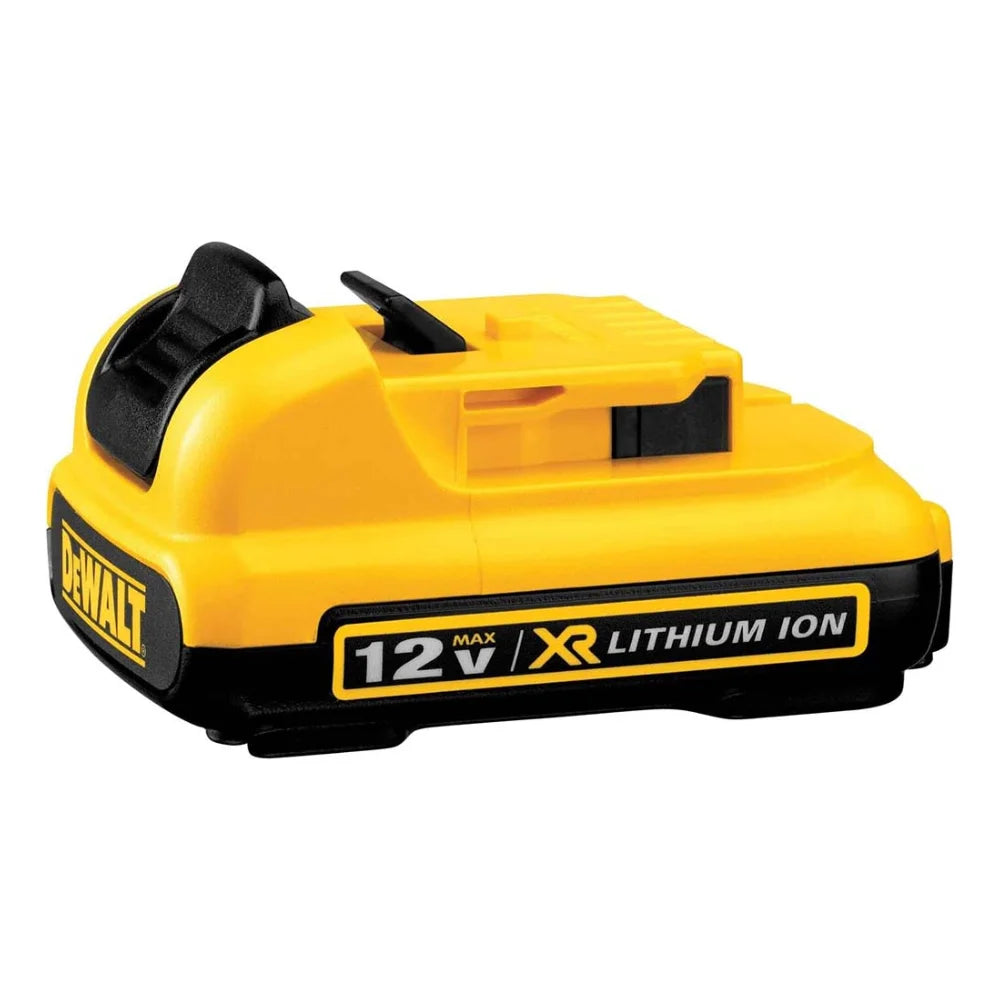
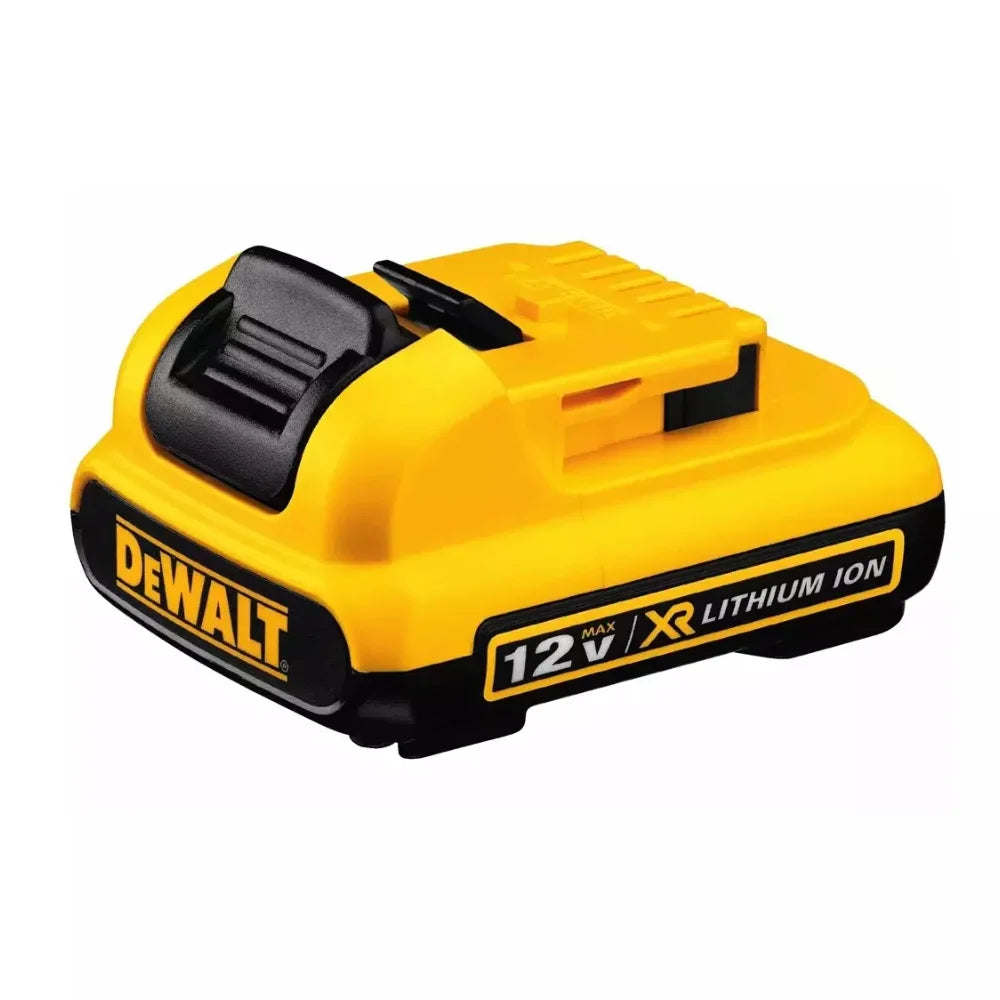
DEWALT Battery 12V Max 2Ah | DCB127
Need Pricing?
Get the best deal tailored to your quantity.
Checkout
Delivery
Returns
Important Product Notice: Replaced
The DEWALT DCB127 12VMax 2Ah battery has been discontinued and is now replaced by the DEWALT DCB124 12VMax 3Ah battery. The new model offers more runtime. It is fully compatible with all DEWALT 12V and 10,8V tools
Explore the DCB124 12VMax 3Ah battery.
Features of DCB127:
Power your 12V Max or 10,8V tools with this compact and lightweight 2Ah Battery. Designed to charge quickly, this battery offers helps minimise downtime on tough jobs.
- Compact, lightweight design
- Quick 30-minute charge time on DCB1104 charger
- No memory and virtually no self-discharge for maximum productivity and less downtime
Requires any of these chargers (DCB107, DCB112, DCB113, DCB1104 & DCB118)
Is there a difference between 10.8V batteries and 12V Max* batteries?
No. It is how they are marketed and labeled rather than in their actual performance or specifications.
Technical Difference
- Voltage Rating: Both 10.8V and 12V Max* batteries have a nominal voltage of around 10.8V. The 12V Max* labeling refers to the maximum voltage the battery can reach when fully charged, which is about 12V. The 10.8V rating is the nominal voltage.
Marketing Difference
- Labeling: The change from 10.8V to 12V Max was primarily a marketing decision. The 12V Max label is used to emphasize the maximum potential voltage of the battery when fully charged, which sounds more powerful to consumers.
- Compatibility: Despite the different labels, 10.8V and 12V Max batteries are fully compatible with both 10.8V and 12V Max tools and chargers.
Practical Considerations
- Performance: There is no difference in performance between the two labels. Both deliver the same power and runtime.
- Tool Compatibility: 12V Max batteries can be used on 10,8V tools. And 10,8V batteries can also be used on 12V Max tools
In summary, the main difference is in the labeling, with 12V Max* being the marketing term for the same 10.8V nominal voltage battery. The performance and compatibility remain largely the same.